
Is Your Child Just Stubborn, or Are They Struggling with Emotional Regulation?
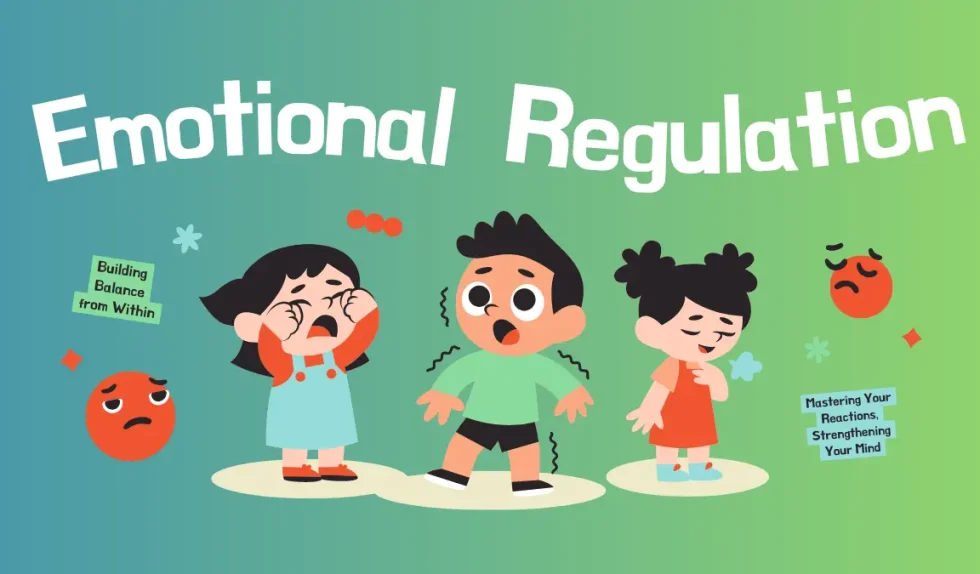
“She’s just stubborn.” “He’s so strong-willed.” “She won’t listen no matter what I say.”
I hear variations of this from parents, teachers, and even fellow psychology students all the time. And I understand why, when a child digs in their heels, melts down over a shoe that feels “wrong,” or explodes because a screen got turned off, it can genuinely look like willful defiance.
But as I’ve spent more time studying child development, I’ve started to ask a different question: what if some of the behavior we label as stubbornness is actually a child’s nervous system doing the best it can with a skill it hasn’t fully developed yet?
This isn’t about diagnosing children or pathologizing normal childhood behavior. Tantrums, refusal, and big emotions are a completely typical part of growing up. But understanding the difference between “won’t” and “can’t yet” can change how we respond and how children learn to manage their emotional world.
Table of Contents
ToggleWhat Emotional Regulation Actually Means
In simple terms, emotional regulation is the ability to notice a feeling, understand it, and respond to it in a way that fits the situation without being completely overwhelmed by it. It’s not about suppressing emotions or always staying calm. It’s about having enough internal capacity to feel something big and still find your way back to steady ground.
This is a skill, not a personality trait. And like any skill, riding a bike, reading, tying shoelaces, it develops gradually, unevenly, and with a lot of support from the adults around a child. A five-year-old’s brain simply hasn’t built the same regulatory circuitry as a fifteen-year-old’s, let alone an adult’s.
Stubbornness vs. Emotional Dysregulation: What’s the Difference?
Here’s where it gets interesting, because on the surface, these two things can look nearly identical.
Stubbornness
Usually involves a child who is fully in control of their thinking. They understand the request, they’re asserting their own preference or will, and they can typically be reasoned with, redirected, or offered a choice even if they’re not thrilled about it.
Emotional dysregulation
Looks different underneath. The child isn’t choosing to resist so much as they’re flooded their thinking brain has essentially gone offline. Logic, bribery, and reasoning don’t land, because the part of the brain that processes language and problem-solving isn’t fully accessible at that moment.
For example: A child who refuses to wear a jacket because they simply don’t want to, and can calmly explain why, is likely exercising healthy independence. A child who screams, cries, or shuts down entirely at the mere suggestion of a jacket and can’t explain why, calm down, or be reasoned with may be experiencing something closer to dysregulation, especially if this happens frequently and intensely.
Neither response is “bad.” But they call for different kinds of support.
Possible Signs of Emotional Regulation Difficulties
Every child has hard days. But some patterns, especially when frequent, intense, or disproportionate to the situation, may point to an underlying struggle with regulation rather than simple willfulness:
• Intense emotional reactions that feel disproportionate to the trigger
• Difficulty calming down once upset, even with comfort or reassurance
• Frequent meltdowns, especially around transitions or unmet expectations
• Trouble shifting from one activity or environment to another
• Impulsive reactions, hitting, yelling, or fleeing before thinking
• Shutting down, going quiet, or withdrawing rather than expressing distress
• Difficulty naming or describing what they’re feeling
Again this is not a checklist for diagnosis. Every child will show a few of these behaviors sometimes. What matters is the pattern, the intensity, and how much it’s interfering with the child’s daily life and relationships.
What Shapes a Child’s Emotional Regulation
Emotional regulation doesn’t develop in a vacuum. Several factors influence how well a child can manage big feelings at any given moment, including:
• Developmental stage: Younger children have less regulatory capacity.
• Stress load: Poor sleep, hunger, illness, or a packed schedule lowers everyone’s threshold.
• Environment: Noise, chaos, or unpredictability can be harder for some children to filter.
• Temperament: Some children are simply wired to feel things more intensely.
• Family dynamics: Conflict, tension, or inconsistency at home affects a child’s sense of safety.
• Neurodevelopmental differences conditions like ADHD, autism, or sensory processing differences can make regulation more effortful.
• Emotional demands: Big transitions, grief, new siblings, or social stress.
Recent developmental research continues to underscore how relational this process is. A longitudinal study following families from infancy through early school age found that how responsive a caregiver is and how well a child regulates emotion tend to shape each other over time, it’s a two-way street, not something that lives inside the child alone (Kim et al., Emotion, 2025–2026).
Why “Just Calm Down” and Punishment Often Don’t Work
If regulation is a skill, then telling a dysregulated child to “calm down” is a bit like telling someone who can’t swim to “just swim.” The instruction assumes a capability that isn’t there yet.
Similarly, punishing a meltdown through yelling, harsh consequences, or shame may stop the behavior in the moment, but it doesn’t teach the underlying skill. It can also add another layer of stress on top of a nervous system that’s already overwhelmed, which tends to make things harder, not easier, the next time around.
This doesn’t mean boundaries disappear. It means the goal shifts from “stop this behavior immediately” to “help this child build the capacity to handle this differently over time.”
How Parents Can Support Emotional Regulation
The encouraging news is that emotional regulation is highly teachable, especially through everyday moments. Some evidence-informed approaches include:
• Co-regulation: Staying calm and present with your child during distress so your own regulated nervous system can help steady theirs. Researchers describe this as the process through which adults help children gradually build the ability to regulate on their own (Murray et al., 2015).
• Naming emotions: Simply saying “you seem really frustrated right now” helps build the vocabulary and awareness regulation depends on
• Predictable routines: Consistency reduces the number of surprises a child’s nervous system has to manage in a day
• Calm, clear boundaries: Limits stay in place, but they’re delivered without escalation
• Modeling regulation: Children learn far more from watching how adults handle stress than from what adults say about it
• Helping children identify triggers: Gently reflecting on what led up to a hard moment, after everyone is calm
• Teaching coping strategies: Breathing, movement, quiet space, or a comfort object, practiced when calm so it’s available under stress
None of this requires perfection. It requires repetition, the same way any skill is built.
When to Consider Professional Guidance
Most emotional ups and downs are a normal part of childhood and don’t require intervention. But it may be worth speaking with a pediatrician, school counselor, or child psychologist if emotional reactions are consistently intense, are not improving with time and support, or are significantly disrupting school, friendships, or family life.
Seeking guidance early isn’t a sign that something is “wrong” with a child. It’s simply another form of support, the same way we’d seek out a tutor for a child who’s struggling with reading, not because reading is a disorder, but because extra help can make the learning process smoother.
A Reflective Takeaway
Sometimes the behavior we want to correct is actually a skill the child has not yet learned.
That single reframe changes everything about how we respond with more patience, more curiosity, and a little less judgment, both toward our children and toward ourselves as parents and caregivers.
The next time a child seems “stubborn,” it might be worth pausing to ask a different question: is this a battle of wills, or is this a nervous system asking for help?
More in Child & Adolescent Psychology · All psychology articles