Parenting in the Age of Screens: How to Set Boundaries Without Constant Conflict

It usually starts the same way. You give the five-minute warning. Your child says “okay” without looking up. Five minutes pass. You say it’s time. And somehow you’re now in a full negotiation with a seven-year-old who is arguing like a courtroom lawyer, or worse, sobbing on the floor over a game they were bored of ten minutes ago.
If this is a daily feature of your household, I want to offer something that might be more useful than another list of time limits: most screen time conflict is not really a conflict about screens.
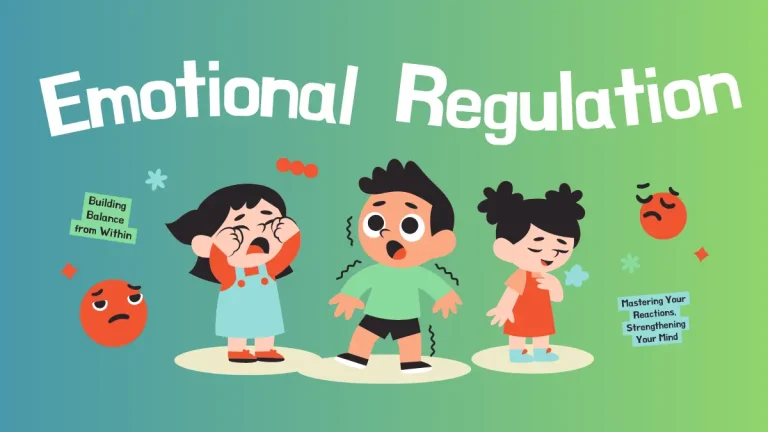
It’s a conflict about transitions, about control, and about what happens in a child’s nervous system when something highly stimulating stops abruptly. Once you understand that, the strategies that actually reduce conflict start to look quite different from the ones most parents try first.
This article covers what screens genuinely do to a child’s attention and mood, why the ending is almost always the flashpoint, what the research does and doesn’t support, and a realistic approach to boundaries that doesn’t require you to become the enemy.
Why Screen Time Ends in a Fight
Think about what a game or a video actually offers a child. It’s fast, visually rich, unpredictable in a rewarding way, and it responds instantly to what they do. Very little else in a child’s day works like that.
Now think about what you’re asking them to switch to. Dinner. Homework. A bath. Slower, quieter, less immediately rewarding.
That gap is the problem. You’re not just asking a child to stop something. You’re asking them to drop from a high state of stimulation to a much lower one, on command, without any of the internal skills adults use to manage that drop. Most young children simply don’t have that yet, and even many teenagers struggle with it.
This is why the conflict often looks disproportionate. The intensity isn’t really about the iPad. It’s about an abrupt shift that their system hasn’t learned to absorb smoothly.
The design factor most parents underestimate
The other half of the picture is that most children’s content is engineered to remove natural stopping points. Autoplay, infinite feeds, endless levels, and rewards timed to keep you going are not accidents. They are design choices, and they work on adults too.
So when a child says “just one more,” they’re often responding to an experience deliberately built to make stopping feel wrong. Recognising this helps in a practical way: it shifts the question from “why won’t my child listen” to “how do we create a stopping point the product isn’t going to provide.”
What the Research Actually Says About Screens and Children
There’s a lot of noise here, and it’s worth being precise.
The American Academy of Pediatrics moved away years ago from a single universal hour limit, and for good reason. Their current guidance emphasises a family media plan built around what a child is doing on the screen, when they’re doing it, and what it’s displacing, rather than a single number that applies to every family.
That’s a meaningful shift. Thirty minutes of a violent, rapid-cut video before bed is not the same as ninety minutes of a video call with grandparents or building something in a creative game with a sibling.
What the evidence supports more consistently
• Sleep displacement is a real and well-documented concern: Screens close to bedtime are associated with shorter and poorer-quality sleep, and poor sleep affects mood, attention, and behavior the following day. This is often where the ripple effects parents notice actually come from.
• Content and context matter more than raw minutes: Passive, fast-paced, or age-inappropriate content shows different associations than interactive or co-viewed content.
• What screens replace is a large part of the story: Time not spent sleeping, moving, playing, or talking with family is the mechanism through which many negative outcomes appear to operate.
What’s more mixed or still emerging
The size of the relationship between general screen use and child mental health outcomes. Effect sizes in large studies are often smaller than headlines suggest, and the direction of causality isn’t always clear. A child who is already struggling emotionally may seek out more screen time, not only the reverse.
Being honest about this matters. Overstating the evidence tends to produce either panic or dismissal, and neither helps you at 7pm on a Tuesday.
Why Most Screen Time Rules Fail
Three patterns come up repeatedly.
The rule exists only in the moment it’s being enforced. If screen time limits are announced mid-conflict, they register as punishment rather than structure. Children push back against rules that appear to be invented on the spot, and honestly, they have a point.
The boundary is about the number, not the transition. Parents focus enormous energy on how many minutes are allowed, and almost none on what happens in the two minutes after the screen goes off. That’s the part that actually determines whether there’s a fight.
The adults are operating under a different set of rules. Children are excellent observers of inconsistency. A household where the parent scrolls through dinner while enforcing a no-screens-at-the-table policy will generate resentment, not compliance.
Practical Takeaways: Boundaries That Reduce Conflict
None of these require becoming a stricter parent. Most of them require becoming a more predictable one.
1. Decide the rules when nobody is upset: Set screen time expectations during a calm moment, ideally with your child’s input. Write them down somewhere visible. The goal is for the boundary to feel like a fact of the household, not a decision you make in the middle of an argument.
2. Build the landing, not just the limit: Plan what comes after. “Screens off at six, then we set the table together” works dramatically better than “screens off at six.” Giving the nervous system somewhere to land makes the drop less jarring.
3. Use end-points the content provides: “After this episode” or “after you finish this level” respects how the child is actually experiencing the activity. An arbitrary cut mid-level feels genuinely unfair from their perspective, and creates more resistance than it needs to.
4. Make the device the boundary, not you: A visible timer, a router schedule, or a device setting shifts the limit from a person to a system. This is a small change with a surprisingly large effect on conflict, because the child is no longer arguing with someone who can be argued with.
5. Protect sleep first: If you only change one thing, make it the last hour before bed. This single boundary tends to improve mood, behaviour, and next-day regulation more reliably than cutting total minutes.
6. Watch what’s on the screen, not just the clock: Sit with them sometimes. Ask what they’re watching and why they like it. Co-viewing does two things at once: it gives you real information about the content, and it turns screens into something shared rather than something confiscated.
7. Expect the boundary to be tested, and don’t read the test as failure: Children push on limits. That’s developmentally normal. A boundary that gets tested and holds calmly teaches far more than one that’s never tested at all.
When Screen Use Might Warrant a Closer Look
Most screen time arguments are ordinary family friction and don’t need professional input. But it may be worth speaking with a paediatrician, school counsellor, or child psychologist if you notice a persistent pattern where screen use appears to be functioning as the main way your child copes with distress, where withdrawal from screens is consistently extreme rather than simply unwelcome, or where sleep, school, friendships, or eating are being meaningfully affected over a sustained period.
The distinction worth holding onto is between a child who’s annoyed when screens end and a child whose day genuinely falls apart without them.
Key Takeaway
Screen time conflict is usually a transition problem wearing a technology costume. Children aren’t fighting for more minutes so much as struggling to move from a highly stimulating state to a much quieter one without support. Boundaries work best when they’re set calmly in advance, enforced by systems rather than arguments, and paired with a plan for what happens next. The number on the clock matters far less than the quality of the landing.
Conclusion
I’ve noticed that the parents who struggle least with screens aren’t the strictest ones. They’re the ones who stopped treating every device as a battle to be won and started treating screen time as something the family manages together, out loud, with rules everyone can name.
Your child isn’t trying to defeat you. They’re trying to stay in something that feels good, with a brain that hasn’t yet learned how to leave it gracefully. That’s a skill, and skills take time. The good news is that you’re teaching it every time you hold a boundary without making it a fight.
FAQ
Q#1 How much screen time is actually okay for my child?
There’s no single number that applies to every child, which is why paediatric guidance has moved toward family media plans rather than fixed limits. A more useful question is what the screen time is displacing. If your child is sleeping well, moving, playing, and connecting with people, the total is likely reasonable for them.
Q#2 Why does my child get so angry when screen time ends?
Because you’re asking them to drop sharply from a highly stimulating state to a much lower one, often without warning or a clear next step. Most children haven’t yet developed the internal skills to manage that shift smoothly, so it comes out as anger or tears.
Q#3 Do warnings before turning screens off actually help?
They help more when they’re concrete and paired with a landing point. “Five more minutes” is vague to a child with little time sense. “After this episode, then we’re making dinner together” gives them both an ending they can see and something to move toward.
Q#4 Is it bad to use screens to calm my child down?
Occasionally, no. As the primary strategy, it’s worth watching. If a screen becomes the main way a child moves out of distress, they get less practice building other coping skills. Using it sometimes on a hard day is very different from relying on it daily.
Q#5 Should I take screens away as a punishment?
It’s often counterproductive. It makes the device feel more valuable, ties it emotionally to conflict, and teaches little about self-regulation. Consequences that relate directly to the behaviour tend to work better.
Q#6 My teenager needs their phone for school and friends. How do I set limits?
Shift from restriction to negotiation. Teenagers respond far better to boundaries they helped design. Focus on protected zones, such as sleep and meals, rather than total hours, and be transparent about your reasoning instead of simply asserting authority.
More in Child & Adolescent Psychology · All psychology articles