Why Do Teenagers Pull Away From Their Parents? Understanding Adolescent Independence and Emotional Connection
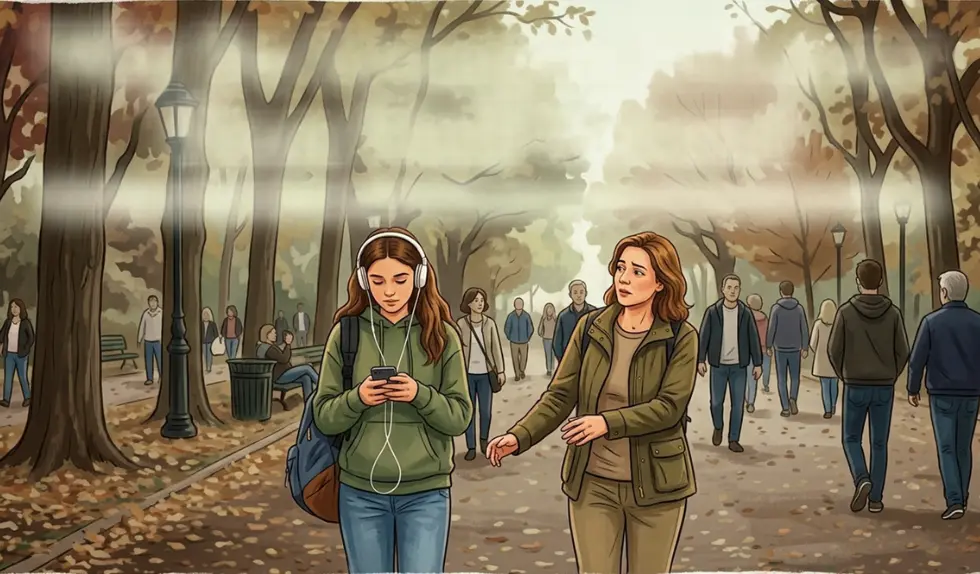
A father once told me the strangest part of raising a teenager wasn’t the arguments. It was the ordinary Tuesday when his son stopped wanting to be picked up from school, requesting instead to be dropped a block away, out of sight.
Nothing was wrong. His son still liked him. But something had shifted, and the father experienced it as a small, specific grief he didn’t quite know how to name.
This is an extremely common experience, and an extremely misunderstood one. Adolescents pulling away from their parents is often not primarily about rejecting the parent. It can be part of how a young person gradually develops a separate sense of self, and understanding the developmental process underneath it can change how parents experience the distance.
The Developmental Task Underneath It
Developmental psychologists describe adolescence as centered on individuation: the process of building an identity distinct from your parents, with your own values, opinions, and sense of who you are, rather than simply experiencing yourself as an extension of your family.
This is not optional or, by itself, a sign of dysfunction. It is an important developmental task, and some psychological space can help it happen. A teenager may need opportunities to discover which of their opinions, preferences, and decisions genuinely feel like their own rather than simply reflecting what a parent thinks or expects.
Erik Erikson’s stage model of psychosocial development frames adolescence around the central task of identity versus role confusion: forming a coherent sense of self that can carry into adulthood. Creating some distance from parents can be one way adolescents experiment with different roles, preferences, and ways of thinking while still having a stable family relationship to return to.
Importantly, independence does not have to mean emotional disconnection. In many families, including Pakistani families where family relationships can remain central throughout adolescence and early adulthood, young people can become more independent while remaining strongly connected to their parents.
What’s Happening Underneath the Behaviour
A brain that’s recalibrating, not malfunctioning
Adolescent brain development follows an uneven timeline. Systems involved in emotional intensity and reward sensitivity mature earlier than the systems supporting long-term planning, impulse control, and perspective-taking, which continue developing into the mid-twenties.
Laurence Steinberg’s research describes this as an accelerator that develops ahead of the brakes. Practically, this means a teenager can feel things very intensely while having comparatively limited capacity to modulate or explain those feelings in the moment. This can sometimes make it easier for a teenager to step away from a difficult interaction than to explain or regulate feelings they do not yet know how to articulate.
A social world that’s genuinely reorganising
A teenager’s social world also expands during adolescence. Friends and peers often become increasingly important sources of belonging, feedback, and support.
This does not necessarily mean that family becomes less important. In Pakistan, adolescents may turn to friends for certain personal or sensitive topics while continuing to rely heavily on parents for emotional support, guidance, and practical matters. The shift is often less about replacing parents and more about expanding the young person’s social world and deciding who feels appropriate to approach different parts of their life.
Privacy as a genuine developmental need, not just secrecy
Privacy can also become more important during adolescence. Research on adolescent disclosure, notably work by Judith Smetana and colleagues, distinguishes between areas where parents have legitimate authority, particularly matters involving safety and significant decisions, and areas adolescents may reasonably experience as more personal, such as some thoughts, friendships, preferences, and everyday social experiences.
Privacy, however, does not mean complete secrecy or the absence of parental guidance. Healthy boundaries can involve giving adolescents some personal space while maintaining appropriate oversight around safety, health, education, and significant responsibilities.
How Much Independence Is Actually Appropriate
This is the question underneath most of the worry, and there isn’t a single number of hours or a fixed age that answers it. What research points to instead is a style of parenting that tends to support healthy independence.
Developmental psychologists consistently find positive outcomes associated with an authoritative approach: high warmth combined with clear, consistently enforced expectations. This differs from an authoritarian style, which relies more heavily on control with less warmth, and a permissive style, which offers warmth with relatively little structure.
In practice, this tends to look like negotiated autonomy rather than either total restriction or total freedom. Independence can be extended gradually in response to a teenager’s age, maturity, responsibilities, and demonstrated ability to handle it, while clear boundaries remain around genuine safety concerns.
The exact balance will look different across families and cultures. In Pakistani families, for example, adolescents may continue to have substantial family responsibilities and parental involvement while gradually gaining more say in personal preferences, friendships, education, and everyday decisions.
Signs the Distance May Be Part of Healthy Development
- Sharing some things more with friends or peers than with parents, while still being able to talk to parents when needed
- Wanting more age-appropriate privacy around their room, phone, devices, or personal conversations is common during adolescence. Setting healthy screen time boundaries can also help parents balance a teenager’s growing independence with appropriate structure.
- Irritability that is situational and passes rather than becoming persistent or pervasive
- Continuing to function reasonably well at school, university, and in friendships
- Still participating in family life, even if they spend less time with family than before
- Turning to parents or another trusted adult for support during genuinely difficult situations, even while seeking greater independence day to day
These signs do not prove that everything is fine. They simply suggest that increased distance may be part of normal adolescent development, particularly when the teenager remains connected to other parts of life.
Signs Worth Paying Closer Attention To
- Withdrawal from friends as well as family, not just family
- Loss of interest in activities they previously cared about
- Sustained changes in sleep, appetite, or energy
- A drop in school or university functioning without an obvious explanation
- Expressions of hopelessness, worthlessness, or feeling like a burden
- Distance that appears suddenly alongside a significant change in mood or behaviour, rather than developing gradually over time
The key distinction is breadth. Withdrawing specifically from parents while remaining engaged in friendships, interests, education, and everyday life may be consistent with healthy individuation. Withdrawing from nearly everything and everyone is a different picture and is worth discussing with a qualified professional rather than trying to diagnose it yourself.
Practical Takeaways: Staying Connected Through the Distance
Extend autonomy proactively rather than only under pressure
Offering appropriate independence before it is demanded communicates trust, whereas granting it only after conflict can make every negotiation feel like a battle to be won.
Keep the relationship separate from compliance
Warmth and connection should not be entirely dependent on a teenager doing what you ask. Research on authoritative parenting consistently highlights the importance of maintaining warmth and structure together rather than treating them as alternatives.
Respect the areas where age-appropriate privacy is reasonable
Distinguish between genuine safety concerns and personal preferences, while recognising that appropriate boundaries will vary according to a teenager’s age, maturity, family circumstances, and cultural context. Personal preferences, friendships, interests, and everyday choices may allow for more autonomy, while safety and significant health or wellbeing concerns may require closer parental involvement.
Create low-pressure opportunities for connection
Shared activities without an agenda, a drive, a meal, a show you both watch can create opportunities for genuine connection without making the teenager feel pressured to have a serious conversation.
Let go of the specific form connection used to take
The version of closeness you had with a nine-year-old may not be the version available with a fifteen-year-old, and grieving that change is reasonable. The relationship is not necessarily disappearing. It is changing shape.
Stay predictably available rather than pursuing
Many teenagers respond better when parents remain reliably available without turning every moment of distance into a confrontation or a demand for conversation. Let them know you are there, while giving them room to approach you in their own time.
When to Seek Professional Support
Consider speaking with a school counsellor, GP, or adolescent psychologist if withdrawal extends to friendships and other areas of life, if it is accompanied by persistent changes in mood, sleep, or appetite, if school or university functioning drops significantly without explanation, or if your teenager expresses hopelessness, thoughts of death or suicide, or a wish not to be alive.
If you are ever concerned about immediate safety, contact local emergency services or an appropriate crisis service without delay.
Key Takeaway
Some degree of increased distance from parents can be a normal part of adolescence as young people develop a stronger sense of identity and independence. The parenting approach most consistently associated with healthy outcomes combines steady warmth with clear, negotiated boundaries rather than either tightening control or stepping back entirely.
For a worried parent, what matters is not simply how much your teenager is pulling away from you, but what is happening around that distance. Are they still connected to friends, interests, education, family life, and sources of support? If so, the growing need for space may be part of becoming more independent. If withdrawal begins to spread across every part of their life or appears alongside significant changes in mood or functioning, it deserves closer attention.
Conclusion
The hardest part of adolescence for many parents is recognising that closeness can change without disappearing.
A teenager may want more privacy, spend more time with friends, question family expectations, or become less openly expressive with parents. In many cases, these changes are part of developing a stronger sense of identity and independence. But independence does not have to mean disconnection, and cultural context matters. In Pakistan, where family relationships often remain central to adolescents’ emotional and practical lives, growing autonomy can exist alongside strong family attachment.
The goal is not to prevent distance or to remove every boundary. It is to remain a secure and supportive presence while allowing age-appropriate independence to develop. Pay attention not only to how much your teenager is pulling away from you, but to whether they remain connected to friends, interests, education, family life, and sources of support.
The relationship is not necessarily ending. It may simply be changing shape and learning how to stay connected through that change is part of parenting an adolescent.
FAQ
Is it normal for my teenager to want less time with me?
Yes, it can be. Building an identity separate from parents is an important part of adolescence, and some increase in independence and privacy is common. What matters more than the amount of distance is whether your teenager remains engaged with friends, interests, education, family life, and sources of support.
How much independence should I give a teenager?
Research does not point to a fixed age or amount of independence. Instead, it supports gradually extending autonomy while maintaining clear expectations and boundaries around genuine safety concerns. The appropriate level will depend on the teenager’s age, maturity, responsibilities, family circumstances, and cultural context.
Why does my teenager tell their friends things they won’t tell me?
Friends often become increasingly important sources of belonging and support during adolescence. A teenager may therefore choose to discuss some personal or sensitive topics with friends while continuing to rely on parents for other forms of support and guidance. This does not necessarily mean they value their parents less.
Should I be worried if my teenager wants their door closed all the time?
Not necessarily. Wanting more privacy can be a normal part of adolescence. The meaning depends on the teenager’s age, family context, what they are doing, and whether there are other changes in their behaviour. It becomes more worth paying attention to when privacy is accompanied by withdrawal from friends, loss of interest in previously enjoyable activities, persistent changes in mood, or problems with everyday functioning.
How do I stay close to a teenager who clearly wants space?
Low-pressure shared activities can create opportunities for connection without making the teenager feel pressured. Staying reliably available, rather than constantly pursuing closeness or demanding conversation, can help maintain the relationship while giving them room to become more independent.
What parenting style works best for teenagers?
Research generally associates an authoritative approach, combining warmth with clear expectations and appropriate limits with positive adolescent outcomes. The goal is neither strict control nor complete freedom, but a balance between connection, structure, and gradually increasing autonomy.
Sources
- Steinberg, L. (2014). Age of Opportunity: Lessons from the New Science of Adolescence. Houghton Mifflin Harcourt.
- Smetana, J. G. (2010). Adolescents, Families, and Social Development: How Teens Construct Their Worlds. Wiley-Blackwell.
- Erikson, E. H. (1968). Identity: Youth and Crisis. W. W. Norton & Company.
- Baumrind, D. (1991). The influence of parenting style on adolescent competence and substance use. Journal of Early Adolescence, 11(1), 56–95.
More in Child & Adolescent Psychology · All psychology articles